

Genesis + Proferrum Guide
Genesis + Proferrum Guide
Couldn't load pickup availability
Digital Files
Digital Files
Important to keep in mind: when a product is offered as a digital file, you are purchasing a digital asset designed to help you create, print, collect, or enjoy content in 2D or 3D, depending on the nature of the product.
Digital files are delivered instantly after purchase, with no physical shipping, no delivery waiting time, and no shipping costs.
Some digital files may be simple printable images, artwork, STL models, tokens, or other standalone assets. These products are designed to be downloaded and used directly by the customer.
Other digital products are connected to the epic lore of Kwasar: Chronicles of Heroes and the Multiverse Z. Through these products, you may discover stories, heroes, powers, races, and mysteries from the Multiverse-Z, as well as creative concepts linked to fantasy, sci-fi, myth, anime, 2D art, 3D printing, and collectible assets.
Some e-books and selected digital products may also guide you into the Arkademy, where you can learn creative workflows and skills related to 2D printing, 3D printing, asset creation, tokens, miniatures, and printable content.
Therefore, each digital file should be understood according to its own description. Some are simple downloadable assets. Others are part of a larger creative journey through Kwasar: Chronicles of Heroes, the Multiverse Z, and the Arkademy.
AGE RECOMENDATION 16+
AGE RECOMENDATION 16+
Age Recommendation for Website Content (16+)
Our stories feature intricate plotlines, deep character development, and mature themes designed for a more experienced audience. While our content is suitable for readers 16 and older, we advise discretion, as some narratives may include complex themes, sophisticated language, and intense scenarios.
Parental guidance is recommended for readers under 16, and we encourage guardians to assess content suitability based on individual maturity levels.
This recommendation helps ensure an enjoyable and appropriate experience for all. We appreciate your understanding and cooperation.
Unofficial Educational Resource
Unofficial Educational Resource
Important Note – Independent and Unofficial Educational Resource:
This website is an independent and unofficial educational resource created to help players learn and enjoy Dungeons & Dragons.
We are not affiliated with, endorsed by, or officially connected to Wizards of the Coast LLC or Hasbro.
Our sole purpose is to introduce, teach, and expand awareness of the game to as many players as possible, driven by our passion for the hobby and our respect for its creators.
All educational content on this website is based on the System Reference Document (SRD) 5.2.1, which are released under the Creative Commons Attribution 4.0 International License (CC-BY-4.0). This allows us to use, adapt, and teach these rules freely, provided that proper attribution is given to the original creators.
Attribution Notice:
This work includes material from the System Reference Document 5.2.1 (SRD 5.2.1) by Wizards of the Coast LLC, available at:
https://www.dndbeyond.com/srd
The SRD 5.2.1 is licensed under the Creative Commons Attribution 4.0 International License (CC-BY-4.0):
https://creativecommons.org/licenses/by/4.0/legalcode
We fully respect and recognize the work of Wizards of the Coast LLC, and we strongly encourage all players to support the official game by purchasing original materials such as the Player’s Handbook, Dungeon Master’s Guide, and Monster Manual, which are widely available online and in stores. Our mission is to share knowledge, celebrate creativity, and help grow the global community of players, while always giving proper credit to the creators and respecting their intellectual property.
3D Printed Minis
3D Printed Minis
Important information about our 3D printed miniatures
Our 3D printed miniatures are produced on demand, especially for you. This means that each miniature is only printed after the customer has placed the order.
Because these are delicate collector pieces, every miniature is carefully printed, cleaned, prepared, checked, packed, and protected with great care before being shipped.
The usual production and preparation time is up to 7 days. This includes printing, post-processing, quality checking, packaging, and preparing the order for dispatch. Due to the high demand for our miniatures, this preparation time allows us to make sure every piece is produced properly and handled with the attention it deserves.
Once your miniature has been printed, packed, and prepared, it will be shipped to you with free shipping. Delivery usually takes around 3 to 5 days after dispatch.
Please keep in mind that the full waiting time may be up to 14 days from the date of purchase, including production, preparation, packaging, and shipping. If our workload is lower, your order may arrive sooner, but customers should allow up to two weeks to receive their miniature.
Our miniatures are printed using high-quality resin and advanced 3D printing technology to achieve highly detailed results. We have over 10 years of experience working with 3D printing, digital sculpting workflows, miniature production, and professional print preparation.
Every miniature is created with care, precision, and respect for the artwork, so you receive a beautiful piece ready to be collected, painted, displayed, or used in your fantasy adventures.
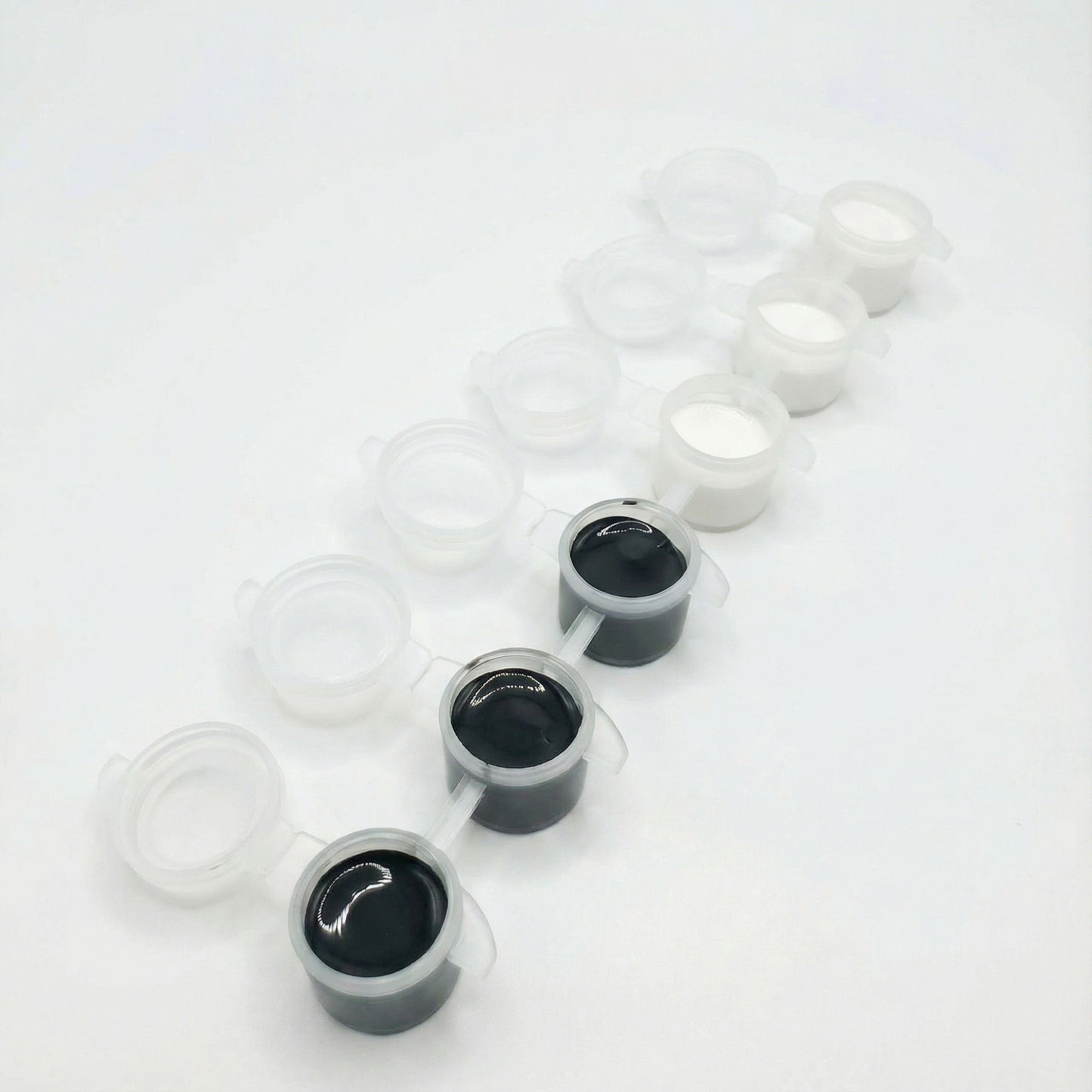
Sample Paints
Sample Paints
Aquí lo tienes reescrito correctamente, ordenado por párrafos y con redacción más profesional en inglés:
Disclaimer Regarding Mini Paint Samples
The mini paint samples included in this kit are provided free of charge and are intended strictly for practice purposes and introductory learning.
These samples are specifically intended for individuals who are new to crafting and miniature painting, allowing them to experiment with basic techniques before committing to purchasing larger quantities or specialised paints.
These samples are not intended for commercial use or resale.
Nature of the Product
The mini paint samples provided in this kit are non-professional. They are not designed to produce professional-quality or permanent finishes and are intended strictly as preliminary learning tools for those starting their crafting or miniature painting journey.
The paint provided is supplied in limited quantities. These small amounts are sufficient only for basic experimentation and learning, and are not intended for completing advanced, large-scale, or professional-level projects.
The samples are non-commercial. They are provided without monetary value, are not for sale individually, and are included only as a learning aid within the crafting kit.
Age Restriction
These mini paint samples are not suitable for use by children and should only be used by individuals aged 18 years or older.
The paints are intended for adult use due to their application methods and general safety considerations. It is the recipient’s responsibility to ensure that the paints are kept out of reach of children to prevent unintended use, ingestion, or misuse.
Compliance and Safety Standards
The paint samples are intended for general crafting use only. Where applicable, they are formulated to comply with ASTM D-4236 standards for non-toxic art and craft materials. However, they are not formulated, tested, or intended for use by children, nor are they suitable for food contact, ingestion, cosmetic use, or application to the skin.
The provision of these samples free of charge is intended to comply with applicable consumer safety and product liability regulations. These samples are provided as complimentary educational items, with clear information regarding their intended use and limitations.
These samples are provided without monetary value. They are complimentary items included to enhance the educational value of this kit and are not sold individually as goods.
Assumption of Risk
By accepting and using these mini paint samples, the recipient acknowledges and agrees that the paint samples are not intended for professional use or for producing professional-grade finishes. They are to be used solely for learning, testing, and practice purposes.
The paints should only be used in well-ventilated areas and with appropriate safety precautions. Protective gloves, protective clothing, or surface protection should be used where necessary.
The use of these samples is the responsibility of the recipient. Any potential risks, including those relating to health, property damage, staining, incorrect application, or unsatisfactory results, are assumed by the user.
The recipient assumes responsibility for the use of these paint samples, including any unintended consequences or outcomes resulting from misuse, mishandling, or failure to follow appropriate safety precautions.
The recipient understands that these samples are provided on an “as-is” basis, without any guarantees or warranties, either express or implied, regarding their performance, suitability, durability, or fitness for any particular purpose.
Liability Disclaimer
The seller disclaims liability for injuries, damages, losses, or unsatisfactory results that may occur from the misuse, mishandling, or inappropriate use of the paint samples.
The seller also disclaims liability for unmet expectations regarding the results obtained from the paints, as these samples are not intended to be professional-grade paints.
The seller shall not be responsible for third-party claims, including but not limited to health issues, property damage, staining, dissatisfaction, or any other issue arising from the use or misuse of these samples.
These paints are offered “as-is”, and the seller makes no representations or warranties regarding the quality, durability, suitability, or performance of the paints for any specific purpose.
The seller shall not be held liable for any direct, indirect, incidental, or consequential damages resulting from the use or misuse of these paint samples.
The paints should only be used under appropriate conditions and in accordance with the information provided.
Intended Use and No Resale
These mini paint samples are for educational and practice use only. They are intended to provide a starting point for beginners in crafting and miniature painting.
They are not for resale, and any attempt to sell or use these paints commercially is strictly prohibited.
The paints are intended only to demonstrate and practise basic techniques and are not a substitute for higher-quality or professional-grade materials required for more advanced projects.
Legal Notice
The seller provides these mini paint samples as introductory, complimentary, and non-commercial items.
The samples are provided free of charge and are not sold as individual products. Their inclusion in the kit is intended solely to support the recipient’s learning and practice experience.
The use of these samples is at the user’s own risk. The seller shall not be responsible for misuse, mishandling, failure to follow safety precautions, or use outside the intended purpose described in this disclaimer.
By using these samples, the recipient acknowledges the limitations of the product and accepts responsibility for their safe and appropriate use.
Requirement to Read Before Use
The recipient is required to read this entire disclaimer carefully before using the provided mini paint samples.
By using these samples, the recipient confirms that they understand and accept the information stated above, including the intended use, limitations, safety guidance, assumption of risk, and liability disclaimer.
If you do not agree with these terms, please do not use the provided mini paint samples.
Use of these samples constitutes acceptance of these terms.
Free Shipping
Free Shipping
Free Shipping
We are happy to offer free shipping on our 3D printed miniatures.
Please keep in mind that every miniature is printed on demand, especially for you. This means that your miniature is not mass-produced or taken from a large warehouse stock. It is printed only after your order has been placed, then carefully cleaned, checked, packed, and prepared for shipping.
Because our miniatures are delicate collector pieces, the packaging process is very important. Each order is handled with care to help protect the miniature during delivery.
The usual production and preparation time is up to 7 days before dispatch. Once your miniature has been printed, prepared, and packed, delivery usually takes around 3 to 5 days.
This means that the full waiting time may be up to 14 days from the date of purchase, including printing, preparation, packaging, and shipping.
Free shipping is included for you, but please be patient while your miniature is created and prepared with the care it deserves. If our workload is lower, your order may arrive sooner, but we recommend allowing up to two weeks for delivery.
Genesis, The First Prime Hero
Before the first crown, before the first temple, before the first warrior raised a blade beneath the stars, there was Goddark.
He stood alone upon the edge of creation, surrounded by galaxies, newborn suns, ancient moons, and rivers of celestial fire. His hair was white like the first light of existence, his eyes burned with cold blue intelligence, and his face carried the calm confidence of a being who had seen galaxies rise before time itself had learned to breathe.
Around his body flowed the Sublime Skin, the sacred and unmistakable vestment of the Architects of Tzion. It was not armour, nor cloth, nor mortal fabric. It was a divine second skin, seamless and immaculate, sculpted from pure white cosmic matter and traced with golden lines like the geometry of creation itself. Every golden contour across his chest, arms, and legs seemed to follow hidden laws of the universe, as if his body had been written in the language of stars.
The Sublime Skin did not protect him because he was fragile.
It revealed what he truly was.
An Architect.
A maker of worlds.
A sovereign intelligence capable of shaping matter, energy, destiny, and life.
So, Goddark was the Architect of Tzion, the divine mind that had shaped the laws of its newborn reality. Yet in the hidden wounds of his spirit, there remained a name he could not forget.
Primo.
The tragedy of Primo had not destroyed Goddark, but it had broken something sacred within him. His trust had been wounded. His certainty had been poisoned. The Altiverse, the spiritual soul of the Universe, once felt like a palace of infinite light. After Primo, it felt like an endless chamber of echoes.
So Goddark made a decision.
He would no longer remain only in the spiritual realm. He would enter the physical Universe of Tzion. He would touch matter. He would feel gravity. He would breathe the air of his own creation.
And at the very centre of Tzion, he created the mother planet.
Urkulo.
If you look at Urkulo from the vastness of space, you may think, for a brief moment, that it resembles Earth. But Urkulo is nothing like Earth.
Urkulo is the Mother Planet — the original world from which planets like Earth draw their ancient reflection, and that is why the resemblance exists.
Earth-like worlds are only distant echoes of its design, fragments of its memory, shadows of its beauty. Urkulo is not simply another planet among the stars; it is the sacred planetary origin, the cradle of impossible life, the first great womb of Tzion. And simply for your understanding, Urkulo is not the size of Earth. It is almost unimaginable in scale: ten thousand times larger than the planet Earth, a colossal living world of mountains, oceans, forests, civilizations, mysteries, and divine power.
Kronos
There, upon Urkulo, Goddark took flesh.
And when the Architect became physical, he was no longer called only Goddark.
He became Kronos.
For the first time, the creator walked inside his own creation.
He felt wind strike his face. He felt rain slide over his skin. He felt the weight of his body upon the soil. He looked at the stars not as an Architect watching from above, but as a living being standing beneath them.
And beneath the sacred earth of Urkulo, he found the substance from which all future life would be born.
The universal clay.
The genetic source of all creatures.
The sacred matter known as Ex-Codice.
Within the Ex-Codice slept the possibility of every beast, every race, every civilization, every Sapiens yet to exist. It was not mud in the simple sense. It was memory before memory. Flesh before flesh. Destiny before destiny.
Kronos knelt before it.
For a long time, he did not move.
He had created planets before. Stars. Laws. Oceans. Light.
But this was different.
This was life with thought.
Life with soul.
Life capable of looking back at him.
Slowly, he placed his hands into the Ex-Codice.
At first, nothing happened.
Then the clay began to tremble.
A pulse moved through the soil of Urkulo. The mountains answered with deep thunder. The rivers stopped flowing. The winds fell silent. Even the stars seemed to lean closer.
And then something within Kronos broke open.
Not weakness.
Power.
A terrible, beautiful eruption of divine force.
All the sorrow left by Primo. All the loneliness. All the hope. All the desperate desire to create something pure, something untouched by betrayal, something that could begin again where trust had died.
It poured from him in a single impossible explosion.
The Ex-Codice rose in spirals, shining like liquid night. It wrapped itself in light, in blood, in breath, in shape. The air burned violet and gold. The ground cracked beneath the pressure of creation.
And from that storm, she emerged.
A woman.
The first Sapiens.
Genesis
She opened her eyes beneath the newborn stars, and the Universe seemed to become aware of itself.
Her hair fell around her shoulders like liquid night, black as the silence before the first dawn, moving gently with the breath of the living forest that surrounded her. Her eyes were dark and profound, not empty, but infinite — as if the first shadows of creation had gathered inside them to witness the birth of consciousness. She stood among ancient trees, moss-covered roots, wild flowers and sacred green light, wearing a simple white dress that flowed to the earth like untouched moonlight. There was no crown upon her head, no armour around her body, no weapon in her hands, and yet the world seemed to bow around her.
Her beauty was not merely physical; it was the beauty of something created before imperfection had learned how to exist. She was grace before shame, strength before violence, innocence before fear. The forest did not surround her like a prison, but like a temple. The branches curved above her as if nature itself had formed an archway for her arrival, and the leaves moved around her like whispers of the first language of life.
She looked fragile only to those who did not understand creation.
Because beneath that calm face, beneath that white garment, beneath that untouched silence, there was the first spark of a destiny that would one day shake the stars.
The Genesis Mark.
Thus, long before Kronos himself fully understood what had begun, a seed was planted in the future of the Kwasar Empire.
Genesis had not yet become a Kwasar.
Not yet.
She was still the first Sapiens of the Universe, the first living miracle shaped from Ex-Codice, the first pure flame born from the hands of Kronos. But Kronos knew — deep within the silence of his divine heart — that her destiny would not end as Sapiens.
Soon, she would become something greater.
Soon, she would become the first Kwasar.
And from that sacred destiny, a law without words began to form: every Kwasar who would ever rise after her would be shaped in the image and likeness of Genesis — the first Sapiens, the future first Kwasar, the one from whom all heroic beauty would take its measure.
This would become known as The Genesis Mark.
In eternal reverence to her, every Kwasar would be born with eyes as black as Genesis’s first gaze, deep as the silence between galaxies, and hair as black as hers — black as the unborn night, black as the void before the first star, black as the sacred darkness from which the Universe itself had awakened.
For Genesis was not merely the first.
She was the pattern.
The origin.
The sacred image from which the future of all Kwasars would one day rise.
The First Kwasar
Kronos stared at her, unable to speak.
He had intended to create life.
He had not expected to create wonder.
In that moment, he understood that what had happened could never be repeated. The explosion that had given birth to Genesis had come from a divine wound, from a grief so deep and a hope so pure that even he could not summon it again.
She was the first.
And because she was the first, she carried the magic of the unrepeatable.
She looked at him with newborn innocence.
“Who am I?” she asked.
Her voice was soft, but the Universe listened.
Kronos approached her slowly, almost afraid that if he moved too quickly, the miracle would vanish.
“You are Genesis,” he said. “The beginning.”
She looked at her hands, then at the world around her.
“And you?”
He hesitated.
“I am Kronos.”
But deep within her, though she did not yet understand why, she sensed that he was more than flesh.
More than a man.
More than a teacher.
He was the one from whom everything around her had come.
And yet he looked at her not with domination, but with astonishment.
For a time, they remained there in silence, creator and first creation, standing upon the sacred soil of Urkulo.
Then Kronos saw her heart.
He saw no corruption in it. No cruelty. No hunger for power. Only purity, curiosity, courage, and a tenderness so profound that it stirred something dangerous inside him.
Hope.
And because of that hope, he decided she would not remain only Sapiens.
She would become the first guardian of Tzion.
The first vessel of the higher union.
The first Kwasar.
Polaris
So Kronos lifted his gaze toward the unseen gates of the Altiverse and called forth one of the sacred spirits born from his own divine essence.
A Pioneer Spirit.
From the spiritual realm descended a being of impossible beauty.
She was feminine in form, though not flesh. Her hair flowed red like living fire. Her eyes shone green like the purest emeralds of Urkulo. Her body, covered by her Sublime Skin, was luminous, intangible, visible yet untouchable, a spirit shaped from loyalty, radiance, and ancient power.
The Sublime Skin
Allow me to explain something important.
Allow me to reveal what the Sublime Skin truly is.
By the end of this story, you will understand it perfectly. But for now, let me anticipate this: the Sublime Skin is one of the most iconic garments of the Kwasar Empire — a sacred symbol worn by those who serve Goddark, the Great Architect of all Sapiens.
Look at Polaris below.
Look at how she wears it with pride.
This is not merely clothing. It is not decoration. It is not armour in the ordinary sense.
The Sublime Skin is a sign of devotion, elegance, discipline and divine purpose. It represents loyalty to the Architect, reverence for the origin of all life, and the sacred duty carried by those chosen to protect the destiny of Tzion.
On Polaris, the Sublime Skin does not hide her light.
It reveals it.
It wraps around her luminous form like a second destiny, shaping her presence into something regal, celestial and untouchable. Every line, every curve, every sacred detail speaks of service, power and belonging.
For the servants of Goddark do not dress merely to be seen.
They dress to remember who they are.
And Polaris wears the Sublime Skin as it was meant to be worn:
with honour, with beauty, and with the silent authority of one who was born from divine fire.
The Union
Genesis watched her descend with wide eyes.
“Is she alive?” she whispered.
“Yes,” said Kronos. “But not as you are. She is spirit. She is one of my Pioneers. If she joins with you, you will become something greater than Sapiens.”
Polaris came near.
For a moment, the two women looked at each other: one born from clay, the other born from spirit.
Then Polaris smiled.
There was no fear in Genesis.
She lifted her hand.
Polaris touched it.
And the union began.
Light burst outward across Urkulo. The forests bent beneath the pressure. The rivers leapt from their beds like silver serpents. A ring of violet flame expanded around Genesis, and her body arched as the Pioneer entered her soul.
It was not possession.
It was fusion.
The Sapiens gave flesh.
The Pioneer gave spirit.
Together, they became something new.
A Kwasar.
Genesis fell to her knees, gasping. Her heartbeat was thunder. Her blood felt like starlight. Every sound became sharper. Every colour became deeper. She could hear the movement of insects beneath leaves. She could feel the vibration of distant waterfalls through the soles of her feet.
Her muscles strengthened. Her reflexes awakened. Her vision became almost divine.
And when she rose again, her beauty had changed.
It had not become less human.
It had become more than human.
Kronos stepped back.
He had been prepared for power.
He had not been prepared for this.
Genesis looked at him, frightened and amazed.
“What has happened to me?”
“You have become the first Kwasar,” he said. “The first protector of Tzion.”
She touched her chest.
“And Polaris?”
“She is within you. With you. Not beneath you. Not above you. A companion. A second flame sharing your soul.”
Inside her mind, Genesis felt a warm presence answer.
I am here.
Tears formed in her black eyes.
For the first time since her birth, she was not alone inside herself.
From that day onward, Kronos became her teacher.
Her Magister.
And she became his Prenova.
A new explosion of knowledge.
A soul awakening through instruction.
At first, Genesis learned like a child discovering existence. She asked why the moons followed the sky. Why rivers moved. Why stars did not fall. Why her heart hurt when she saw beauty. Why silence could feel full. Why Kronos sometimes looked at the horizon as if remembering something that wounded him.
He answered what he could.
But not everything.
Never Primo.
Not yet.
Adore & Allure
The first powers he taught her were not weapons.
They were expressions.
“Power,” he told her, “must never begin with violence. A Kwasar must first learn to reveal the truth of the soul.”
He taught her Adore.
Through Adore, Genesis could change the colour of her hair at will. At first, it frightened her. Her black hair shimmered into silver, then gold, then deep blue.
She laughed for the first time, and the sound struck Kronos more deeply than any song ever had.
Then he taught her Allure.
Through Allure, she could change the colour of her eyes.
Green like forests. Amber like sunset. Red like battle. Blue like calm waters. Violet like cosmic mysteries.
“These colours are not disguise,” said Kronos. “They are language. Kwasars do not express emotion only through the face. They may reveal their inner state through the body itself. Hair, eyes, aura, movement. The soul speaks through form.”
Genesis practiced for days.
Sometimes her hair became white as snow when she meditated. Sometimes her eyes burned gold when she felt courage. Sometimes both became blue when she listened to the sea.
But slowly, she began to notice something.
Whenever she changed her eyes to violet, Kronos looked at her differently.
Not with control.
Not with pride.
With peace.
As though violet reminded him of something lost, or something he still hoped to find.
So one evening, beneath the twin moons of Urkulo, Genesis chose violet and kept it.
Her eyes became radiant purple. Her black hair shimmered with hidden amethyst undertones when the moonlight touched it.
Kronos saw her and stopped walking.
She smiled softly.
“Does this color please you, Magister?”
He looked away for a moment, as if the question had reached somewhere too vulnerable.
“Yes,” he said. “It does.”
From then on, violet became her chosen expression in his presence.
And that was the first secret sign of love between them.
But love did not arrive like a storm at first.
It arrived like dawn.
Quietly.
Unavoidably.
At the beginning, Kronos resisted it. She was his creation. His student. The first life he had shaped. His duty was to guide her, not desire her companionship. Yet every day she became more than the miracle he had made.
The First Prime Heroe
Genesis became a faithful and devoted Prenova.
She challenged Kronos. Questioned him. Comforted him without knowing she was doing it.
And Genesis, innocent though she was, began to feel something she could not name.
When Kronos stood too close, her breath changed.
When his hand corrected her posture, the contact stayed in her skin long after he moved away.
When he praised her, warmth spread through her chest with such force that even Polaris stirred within her.
You feel deeply, Polaris whispered inside her.
Is it wrong? Genesis asked.
There was a pause.
Not all dangerous things are wrong. But all powerful things must be understood.
So Genesis tried to understand.
And failed.
Because love was not a lesson.
It was an awakening.
As her training deepened, Kronos taught her the Prime Ideal. He explained that the future heroes of Tzion would not be defined merely by strength, but by balance. A Sapiens could become intelligent and still fall into cruelty. A warrior could become powerful and still become a monster. A civilisation could become advanced and still become empty.
“The body must be honoured,” he told her. “Not worshipped. Honoured. Strength is discipline made visible. Beauty is harmony made visible. The mind must guide the body, and the spirit must guide the mind.”
So he trained her body with sacred seriousness.
They ran across mountain ridges until the sunrise burned behind them. They climbed cliffs with bare hands. They swam through freezing rivers. They meditated beneath waterfalls until her breath became steady as stone. They lifted, leapt, struck, balanced, and endured.
And Genesis changed.
Her body became the first heroic ideal of Tzion.
Athletic. Powerful. Feminine. Muscular without losing grace. Beautiful without fragility. Fierce without brutality.
She became what future artists would one day try to capture in statues, paintings, and heroic legends: the Prime Hero — the perfect union of physical excellence, mental clarity, and spiritual fire.
And this is how the Kwasars would one day be known across the Universe of Tzion.
The Kwasars were also called Pro-Sapiens — the next evolution of the Sapiens, beings who had surpassed the limits of ordinary flesh without abandoning the sacred origin from which they came.
But in the common tongue, among the peoples, kingdoms, cities, and worlds of Tzion, they were known by another name:
Prime Heroes.
The honour of the Sapiens.
The living elite of Tzion.
Those who carried beauty, discipline, power, and purpose beyond the boundaries of the mortal form.
Kronos looked upon her evolution with awe.
She was no longer merely the first Sapiens.
She was the first promise.
The proof that flesh could become sacred when guided by discipline.
The Kun Arts
Then came the Kun Arts.
Genesis trained in simple combat garments — light, practical, and made for movement. Nothing about her clothing sought beauty. It served discipline: bare freedom for the limbs, breath for the body, and silence for the mind.
But Kronos was different.
As always, he wore the Sublime Skin.
He never explained it. He never named it before her. He never spoke of why he always appeared in that sacred attire, nor why it seemed to cling to him not like fabric, but like something older than fabric — something alive with meaning.
And because he never explained it, Genesis became curious.
At first, she tried not to stare. But it was impossible.
The Sublime Skin fascinated her.
It was not armour, yet it carried the dignity of armour. It was not royal clothing, yet it made Kronos seem more sovereign than any crown could have done. It moved with him like shadow and light woven together. It seemed shaped from elegance, authority, restraint, and power. There was something magical in it, something unreachable, something almost divine.
To Genesis, it was more than an attire.
It was sublime.
And perhaps that was why, even before she understood its meaning, the image of Kronos wearing it remained carved in her memory like a sacred symbol.
Only later would she understand that the Sublime Skin was not merely what Kronos wore.
It was a sign.
A legacy.
A language of devotion, hierarchy, beauty, and power within the future Kwasar Empire.
But at that time, Genesis knew none of this.
She only knew that Kronos looked eternal.
And then, beneath the silent skies of Irkulo, he began to teach her.
“The Kun Arts,” said Kronos, “are not one martial discipline. They are the root of all combat disciplines. Every strike, every throw, every stance, every weapon form, every method of breath, every philosophy of motion that will one day emerge across the Universe exists here in seed form.”
He touched her forehead.
Knowledge entered her like lightning.
Not complete mastery.
Potential.
Thousands of movements, systems, rhythms, and principles unfolded in her mind.
She saw open-hand combat. Blade combat. Staff combat. Mounted combat. Aerial combat. Defensive redirection. Pressure-point striking. Grappling. Kicking. Circular movement. Linear assault. The silence before attack. The mercy after victory.
She staggered beneath the weight of it.
“I cannot hold all of this.”
“You can,” said Kronos. “But not at once. Knowledge is not mastery. It is only the map. Training is the road.”
And so the true training began.
Every morning, Genesis fought shadows created by Kronos from the Ex-Codice. Every afternoon, she sparred with constructs of beasts not yet born. Every evening, she meditated with Polaris, learning to let the Pioneer’s spiritual instincts flow through her nervous system without overwhelming her own will.
Two Warriors form one
Then Kronos taught her one of the highest arts of the true Kwasars.
The temporary materialisation of the Pioneer.
Using the Ex-Codice, he showed Genesis how to form a second body from universal clay. Not a separate being, not a clone, but a temporary vessel through which Polaris could become tangible while still remaining spiritually connected to Genesis.
The first attempt lasted only seconds.
The second lasted minutes.
The third nearly killed them both from exhaustion.
But finally, after many days, the clay rose, shaped itself, breathed, opened its blue eyes…
And Polaris stood physically before them.
Red hair.
Green eyes.
Radiant body.
Polaris wore her Sublime Skin — the same sacred style of garment worn by Kronos himself — and upon her luminous form, it looked exalted.
Genesis, however, still wore her conventional combat attire.
She had not yet been clothed in the symbols of the Kwasar Empire.
Not yet.
Polaris already looked like a servant of Goddark’s divine order.
Genesis still looked like a warrior in formation — powerful, beautiful, and disciplined, yet still standing at the threshold of the destiny that awaited her: still touched by spirit, yet bound to flesh.
Genesis wept and embraced her.
The two were one, and yet for one hour, they could stand apart.
Two warriors.
One bond.
One shared fire.
Their training became ferocious after that.
Genesis and Polaris fought together across the valleys of Urkulo. They moved like mirrored flames. They learned to strike from opposite angles, to exchange weapons mid-combat, to leap from one another’s momentum, to combine flesh and spirit into impossible battle rhythms.
Kronos watched them grow.
Then, one day, he entered the arena himself.
It was not an arena built by hands. It was a circular valley surrounded by black cliffs, its ground hardened by ancient cosmic heat. Above it, storm clouds gathered though there had been no storm moments before.
“Today,” said Kronos, “you will face me.”
Genesis looked at Polaris.
Polaris smiled.
They attacked together.
The valley exploded.
Genesis came first, low and fast, her fist wrapped in violet force. Polaris descended from above, her heel burning with blue spiritual light. Kronos moved once. The two attacks missed him by the width of a breath.
He struck the air with two fingers.
A shockwave hurled them backward.
They recovered before hitting the ground, twisting mid-air, landing on opposite sides of him.
Again they attacked.
The stone beneath them cracked. Their speed became too great for mortal eyes to follow. Genesis struck with raw power. Polaris struck with spiritual precision.
Still, Kronos was beyond them.
He did not fight like a warrior.
He fought like law.
Gravity seemed to obey him. Space folded around his steps. Every time they thought they had found an opening, he was already elsewhere.
But slowly, something changed.
They began to adapt.
Genesis stopped trying to overpower him. Polaris stopped trying to outmanoeuver him. They listened to each other through the soul-link. They became rhythm.
Then, for the first time, Genesis touched him.
Only a grazing strike across his shoulder.
Barely anything.
But it was contact.
Kronos looked at the mark.
Then he smiled.
The battle ended there.
“You are learning,” he said.
Genesis, exhausted and breathing hard, laughed with fierce joy.
And when Polaris returned into her body, the fusion filled Genesis with a warmth so intense that she collapsed into sleep beneath the stars.
Kronos knelt beside her.
He raised one hand, and the air itself obeyed him.
A veil of soft celestial warmth gathered around Genesis — not fabric, not armour, but a quiet field of protection shaped from his own power. It settled over her like invisible moonlight, shielding her from the cold of the mountain and the silence of the night.
Kronos told himself it was only protection.
Only care.
Only the responsibility of a Magister watching over his Prenova.
But as he remained beside her, listening to her breathing beneath the stars, he knew the truth was becoming harder to deny.
But his hand lingered too long near her face.
And when she shifted in her sleep and whispered, “Magister,” his heart tightened with a pain he did not yet dare name.
Proferrum
As the months passed, Kronos taught her the forging of divine instruments.
He brought her to the deep furnaces beneath Urkulo, where the bones of the planet glowed with ancient heat. There, embedded in the sacred rock, existed the hardest metal in the Universe of Tzion.
Proferrum.
It was nearly indestructible. It did not merely resist force; it remembered force and became stronger from it. It could channel Kwasar energy without shattering. It could hold spiritual imprints. It could become armor, weapon, symbol, and legacy.
“Every true protector must learn the weight of what they carry,” said Kronos.
Together, they forged her armor.
Not a crude shell.
Not a heavy prison of metal.
A sleek heroic exoskeleton, fitted to her body with divine precision. It followed her movement like a second skin, enhancing rather than hiding her athletic form. It was protective, beautiful, functional, and iconic. The first armor of the first Kwasar.
Then came the sword.
A massive blade of Proferrum, almost absurd in scale, wider than the weapons ordinary mortals would ever lift, heavy enough to crush stone under its own weight.
Genesis stared at it.
“You expect me to wield that?”
“I expect you to become worthy of it.”
The first time she tried, it dragged her to one knee.
The second time, she lifted it but could not swing.
The third time, with Polaris strengthening her from within, she moved it through the air.
The sound was like thunder being cut in half.
Days became weeks. Weeks became seasons.
At last, Genesis wielded the great blade as if it had been born with her.
And when she trained beneath the moons, purple eyes burning, purple hair flowing, armour shining over her perfected warrior body, sword carving arcs of silver death through the air, even Kronos felt that the future had revealed itself.
This was what the heroes of Tzion could become.
Not gods.
Not beasts.
Something between.
Something better.
But while her strength grew, so did the forbidden tenderness between them.
It appeared in small moments.
Her fingers brushing his while he passed her a blade.
His hands steadying her waist when correcting a combat stance.
The silence after sparring, when both were too tired to pretend indifference.
The way she looked for him first after every victory.
The way he listened for her footsteps even when he claimed to be meditating.
One afternoon, during archery training, the truth nearly broke free.
Pegaso
They stood in a meadow where the grass shone silver beneath the sun. Kronos had shaped a bow from living Proferrum, elegant and dark, with a string of condensed light.
Genesis struggled with the tension.
“Do not fight the bow,” he said. “Command it with breath.”
He stepped behind her.
His chest nearly touched her back.
His left hand guided her wrist. His right hand covered her fingers. He adjusted the angle of her shoulders, the line of her spine, the position of her feet.
Neither of them spoke.
She could feel his breath near her ear.
He could feel the heat of her body through the thin layer of armor and cloth.
“Focus,” he whispered.
“I am trying,” she answered.
But she was not.
And neither was he.
The arrow trembled.
For one suspended moment, the entire Universe seemed to narrow to the space between his hand and hers.
Then she released.
The arrow flew wild, striking a distant tree and splitting it in half.
They remained frozen.
Then Genesis stepped away quickly, her violet eyes lowered.
“Forgive me, Magister.”
“There is nothing to forgive,” said Kronos, though his voice was no longer steady.
That night, Genesis sat alone beside a lake.
Inside her, Polaris spoke gently.
You love him.
Genesis closed her eyes.
“I should not.”
Should is a word used by those who believe the heart obeys command.
“He is my creator.”
He is also lonely.
“He is my Magister.”
He is also a man when he stands before you as Kronos.
“And I am his first creation.”
You are also yourself.
Genesis opened her eyes. They shifted from violet to deep blue, then back again.
“What if love is a mistake?”
Polaris was silent for a long moment.
Then it is the most powerful mistake creation ever made.
Meanwhile, Kronos wandered the cliffs above the ocean, fighting a war inside himself.
He had shaped her.
He had named her.
He had taught her.
And yet he could no longer deny that Genesis had become the only being in existence who made the silence bearable.
With her, he was not only Architect.
Not only creator.
Not only wounded god.
He was seen.
And that terrified him more than any enemy.
Perhaps because of that fear, he decided to give her something that was not a lesson, not a weapon, not a duty.
A gift.
He led Genesis deep into a forest where the trees grew white bark and silver leaves. Luminous pollen drifted like stars between the branches. At the heart of the forest stood a clearing filled with blue mist.
“I made something for you,” said Kronos.
From the mist emerged a horse.
No ordinary horse.
A perfect white celestial corcel with a mane like flowing moonlight and eyes of radiant blue. Its body was powerful, elegant, noble beyond words. Every step it took caused the grass to glow beneath its hooves.
Genesis forgot how to breathe.
“What is he?”
“A companion,” said Kronos. “A supreme animal. Loyal, intelligent, strong enough to cross the wild lands of Urkulo, and one day, perhaps, the battlefields of worlds not yet born.”
The horse approached her.
“His name is Pegaso.”
Genesis reached out with trembling hands.
Pegaso lowered his head.
She pressed her forehead to his.
The link formed instantly.
Not ownership.
Bond.
A deep spiritual recognition passed between them, pure and immediate. She felt his courage, his freedom, his strength, his trust. He felt her wonder, her loneliness, her rising destiny.
Tears ran down her face.
No battle had done this to her.
No lesson.
No power.
But this gift broke something open in her heart.
She turned to Kronos.
“You created him for me?”
“Yes.”
“Why?”
He looked at her for a long time.
“Because even protectors should not walk alone.”
The words entered her like a vow.
From that day, Pegaso became part of her soul’s landscape. She rode him across the valleys of Urkulo, her violet hair streaming behind her, Proferrum armor flashing beneath the sun, Polaris laughing inside her spirit. In those moments, Genesis felt complete.
And her love for Kronos deepened beyond resistance.
As trust grew between them, Kronos began to speak more openly of his dream for Tzion.
They sat together beneath the stars while Pegaso rested nearby and the ocean below the cliffs reflected the silver moons.
“This Universe must not become uniform,” said Kronos. “Sameness is not balance. I want Tzion to become a vast garden of civilizations. Some will honor ancient ways. Sacred customs. Stone temples. Oral memory. Warrior lineages. Mysticism. These will become the civilizations of Skuda.”
Genesis listened with total attention.
“And others?” she asked.
“Others will reach forward. Machines. Science. Stellar cities. Cybernetic bodies. Artificial suns. These will become Futura.”
“Will they fight?”
“Sometimes.”
“Can it be prevented?”
“No. Conflict is part of freedom. But extinction, corruption, domination without conscience — these must be resisted.”
He looked toward the stars.
“There will be pure Skuda worlds. Pure Futura worlds. Worlds where the two philosophies blend. Worlds of warriors, poets, machines, mystics, kings, rebels, scientists, nomads, priests, and explorers. I want the Universe to contain immense variety. Not one empire. Many destinies.”
“And the Kwasars?”
“They will walk among them. Hidden. Integrated. Anonymous when needed. They will guide without enslaving. Protect without ruling. Intervene when darkness threatens the balance.”
Genesis understood then the magnitude of what he was creating.
She was not being trained for glory.
She was being trained for responsibility.
“I will help you,” she said.
He looked at her.
“You do not yet know how heavy that promise is.”
“Then teach me to carry it.”
Those words struck him deeply.
Because once, long ago, Primo had made promises too.
And those promises had become wounds.
Genesis saw his face change.
“It is him again,” she said softly.
Kronos stood.
“We should rest.”
“No.”
Her voice was gentle, but firm.
“You carry him like a blade inside your chest. You do not need to tell me everything. But do not pretend I cannot see the pain.”
His jaw tightened.
“There are memories even gods cannot touch without bleeding.”
“Then bleed beside me,” she whispered.
He turned away.
For a moment, the old Architect returned: distant, immense, unreachable.
But Genesis did not retreat.
She moved beside him, slowly, giving him every chance to stop her.
He did not.
She sat close.
Then closer.
Then rested her head against his shoulder.
Kronos froze.
The gesture was so simple that it defeated him.
Not worship.
Not obedience.
Comfort.
No one had offered him that since before the wound of Primo.
His hand lifted, uncertain, then settled gently over hers.
They remained that way beneath the moonlight for a long time.
At last, he spoke.
“I trusted him.”
Genesis did not interrupt.
“I believed that what I created in him would return as loyalty. I believed greatness, once given, would naturally honor its source. I was wrong.”
His voice grew quieter.
“He taught me that creation can betray the creator. That love can become ambition. That trust can become a weapon.”
Genesis raised her head and looked at him.
“I am not Primo.”
“I know.”
“Do you?”
He turned toward her.
The pain in his eyes was no longer divine. It was human.
“I want to.”
The space between them vanished.
Neither moved first.
Or perhaps both did.
Their lips met beneath the moons of Urkulo.
The first kiss of the Universe of Tzion.
It was not a conquest.
Not temptation.
Not weakness.
It was the moment loneliness surrendered.
The moment creation became companionship.
The moment Kronos, who had entered flesh to understand his Universe, discovered that even an Architect could be changed by love.
Genesis touched his face.
Her eyes glowed violet brighter than ever before.
Inside her, Polaris was silent.
Not absent.
Reverent.
The kiss ended, but nothing returned to what it had been.
“Magister,” whispered Genesis.
He smiled sadly.
“Not only Magister now.”
“Then what are you?”
He rested his forehead against hers.
“Yours, if the Universe permits it.”
She answered without hesitation.
“And I am yours.”
From that night onward, they were no longer merely teacher and student.
They became lovers.
Partners.
The first divine union of Tzion.
But their love did not weaken their purpose. It deepened it.
Together, they trained harder. Planned further. Dreamed wider. Genesis became not only the first Kwasar but the first sovereign heart of the Universe. Where Kronos saw structure, she saw people. Where he imagined civilizations, she imagined children, families, songs, fears, festivals, griefs, hopes.
“You think in galaxies,” she told him once.
“And you?”
“I think in hearts.”
He laughed softly.
“Then Tzion will need both of us.”
Together, they climbed the highest mountain of Urkulo, a peak so tall that its summit pierced the upper atmosphere and the stars seemed close enough to touch. Pegaso carried Genesis across the final ridge, while Kronos walked beside them with the calm power of a god who had learned to smile again.
There, above the mother world, they looked upon the newborn Universe.
Galaxies turned in luminous spirals.
Nebulas burned like divine banners.
Worlds waited in darkness, ready to receive life.
Kronos raised his hand and opened visions before her.
She saw future planets covered in forests of crystal. Cities of bronze and prayer. Empires of steel and neon. Desert warrior clans beneath red suns. Floating libraries. Ocean civilizations. Sky temples. Mechanical moons. Sacred beasts. Armored champions. Children looking at stars and wondering if they were alone.
She saw danger too.
War.
Pride.
Corruption.
Tyrants.
Creatures born from darkness.
Civilizations that would forget balance.
Heroes who would fail.
Heroes who would rise.
And hidden among them, through ages upon ages, she saw the Kwasars.
Protectors of the origin.
Silent guardians of the dream.
At the centre of it all, she saw herself.
Not as a servant.
Not as an experiment.
As Queen.
The first Queen of Tzion.
Kronos turned to her.
“This Universe was born from my power,” he said. “But perhaps it will survive through your heart.”
Genesis looked at the infinite stars.
Her violet eyes filled with the reflection of everything that would one day exist.
“Then let us build it,” she said.
And so they named the dream together.
Tzion.
The Universe of all Sapiens.
The realm of infinite cultures.
The future battlefield of Skuda and Futura.
The birthplace of the Kwasars.
The sacred home of the first Queen.
And in the oldest memory of the Altiverse, before history became history, before legends became books, before heroes learned to call themselves heroes, there remained one image above all others:
Kronos, the wounded Architect, standing beside Genesis, the first Kwasar, while Polaris burned within her soul and Pegaso bowed beneath the stars.
And from that union, the destiny of Tzion began.
HOW TO PLAY DANGEONS & DRAGONS LIKE A SUPERHERO: LESSON 1
Legal Notice and Attribution
This document is an original derivative work that incorporates and adapts material from the System Reference Document 5.1 (SRD 5.1) and System Reference Document 5.2.1 (SRD 5.2.1), published by Wizards of the Coast and licensed under the Creative Commons Attribution 4.0 International License (CC BY 4.0).
All content derived from the SRD has been modified, expanded, reinterpreted, or restructured for the purpose of creating a distinct and original game system. This work is not a reproduction of the SRD, but a transformation intended to provide new mechanics, frameworks, and gameplay structures while remaining compliant with the terms of the license.
No Product Identity, trademarks, or proprietary elements owned by Wizards of the Coast are used in this document. This includes, but is not limited to, specific setting names, characters, storylines, logos, or any material not explicitly designated as Open Game Content within the SRD. All such intellectual property remains the sole property of Wizards of the Coast and its respective rights holders.
This work is not affiliated with, endorsed, sponsored, or specifically approved by Wizards of the Coast.
Attribution
This work is based on the System Reference Document 5.1 (SRD 5.1) and System Reference Document 5.2.1 (SRD 5.2.1) by Wizards of the Coast and is used under the Creative Commons Attribution 4.0 International License (CC BY 4.0).
Introduction
There comes a point in many Dungeons & Dragons campaigns when ordinary heroism is no longer enough.
A warrior who has slain dragons, a sorcerer who bends storms to their will, a paladin who stands against armies, a rogue who moves like a living shadow—at some stage, these characters stop feeling like mere adventurers. They become something greater. Something legendary. Something that no longer fits comfortably within the limits of the ordinary mortal frame.
That is where this system begins.
Heroic Scale is designed to answer a very specific fantasy:
what happens when D&D characters stop being simply powerful, and begin to feel truly superhuman?
Not just stronger.
Not just higher level.
But mythic. Cinematic. Overwhelming. Impossible.
This is not a replacement for D&D. It does not tear out the heart of the game and build a different one in its place. Instead, it adds a new layer over the familiar structure of classes, spells, attacks, hit points, saving throws, and actions. It takes everything that already makes D&D work—and pushes it upward into a mode of play where characters can shatter fortresses, survive impossible punishment, radiate divine presence, reshape battlefields, and confront threats worthy of gods, titans, and living legends.
The goal of this system is not to create bigger numbers for their own sake.
The goal is to transform the scale of possibility.
With this method, a character is no longer defined only by class and level, but by the magnitude of their existence within the world. A fighter can become a battlefield-demolishing champion. A wizard can stop feeling like a clever mortal with spells and begin to resemble an arcane force of nature. A paladin can stand not merely as a holy knight, but as a luminous avatar of judgment. A barbarian can cease to be a brutal warrior and become a walking catastrophe.
This is the fantasy of playing D&D like a superhero.
Not necessarily in tights.
Not necessarily in a comic-book setting.
But in the deepest mechanical and narrative sense: characters who operate above the limits of ordinary heroes, and whose actions change not just the outcome of a fight, but the meaning of the scene itself.
This system exists for campaigns of apotheosis, demigods, chosen champions, cosmic warriors, mythic bloodlines, world-breakers, divine heirs, anime-scale battles, and epic confrontations where the question is no longer “can we survive this dungeon?” but “what happens when beings of impossible power collide?”
What you are about to read is a framework for making that fantasy playable.
It is a way to preserve the soul of D&D while expanding its horizon. A way to let characters ascend without the game collapsing into nonsense. A way to create meaningful distinctions between a skilled adventurer, a legendary hero, a superhuman champion, and a being whose arrival changes the laws of the battlefield.
In short, this is a system for crossing the line between heroic fantasy and superheroic fantasy.
And now that the intention is clear, here is a brief outline of what we are going to develop in this method of handling superheroic characters in D&D.
Here I present a structured outline of the steps we will follow to adapt the Heroic Scale System for D&D, providing a clear path to integrate superheroic mechanics into your campaign in a cohesive, playable, and narratively powerful way:
Heroic Scale System for D&D
Basic idea
There are six scales of power:
| Scale | Category |
|---|---|
| 0 | Normal mortal |
| 1 | Minihero |
| 2 | Hero |
| 3 | Superhero |
| 4 | Megahero |
| 5 | Ultrahero |
The Heroic Scale represents more than level. It represents the fact that the character has transcended the normal logic of the world.
A level 15 warrior can be brutal.
But a level 15 Superhero warrior is no longer just “very good at fighting”: he splits mountains, stops giants with one hand, and goes through walls as if they were paper.
Fundamental principle of the system
Each character still has:
-
their Ability Scores
-
their proficiency bonus
-
their HP
-
their attacks
-
their class features
But in addition they gain a template called Heroic Rank.
That rank gives them five things:
-
Scale Bonus
-
Resistance Multiplier
-
Heroic Impact Dice
-
Scale Dominance
-
Epic feats proper to the rank
So, instead of breaking the game by multiplying absolutely everything, you scale each part in a meaningful way.
1. SCALE BONUS

Overview
The Scale Bonus is the core numerical expression of Heroic Rank. It represents the raw advantage possessed by beings who exist above ordinary mortal limits. This advantage may come from overwhelming physical force, mythic presence, supernatural precision, divine authority, arcane intensity, or cosmic power.
At its most basic level, the Scale Bonus answers a simple question:
What happens when a character is not merely skilled, but fundamentally greater?
A high-level adventurer may already be impressive within the normal assumptions of D&D. A character with Heroic Rank goes further. Their actions carry more weight. Their blows hit harder. Their will is harder to break. Their presence changes the tone of the scene. The Scale Bonus is the mechanic that translates that superiority into play.
It is not intended to replace class features, proficiency, or ability modifiers. It exists as an additional layer placed over the normal D&D framework to represent heroic transcendence.

Scale Bonus by Rank
| Rank | Scale Bonus |
|---|---|
| Mortal | +0 |
| Minihero | +2 |
| Hero | +4 |
| Superhero | +6 |
| Megahero | +8 |
| Ultrahero | +10 |
These values are intentionally large enough to be felt at the table. Heroic Rank must feel significant. If a higher-rank being does not feel mechanically superior, the fantasy of heroic ascension collapses.
At the same time, the Scale Bonus is controlled through context. It is powerful, but it is not mindless. Its purpose is not to make the character better at literally everything. Its purpose is to make the character feel greater when acting within the scope of their epic nature.
Where the Scale Bonus Applies
The Scale Bonus is added to the following rolls and values when appropriate:
-
attack rolls
-
damage rolls
-
saving throws
-
initiative
-
spell attack rolls
-
spell save DC
-
DC of abilities, powers, and special features
-
ability checks in which Heroic Rank is relevant
When applied to a spell or feature DC, the Scale Bonus increases the final DC directly.
Example
If a Superhero caster has a normal spell save DC of 17, their Scale Bonus increases it to 23 when the spell falls within the scope of heroic application.
Core Rule of Application
The Scale Bonus does not automatically apply to every roll.
It applies only when the action being attempted falls within the character’s epic capability, heroic nature, or supernatural authority.
This is the most important rule in the entire section.
The Scale Bonus is not a universal passive modifier to all play. It is a rule for moments when the character is acting as the larger-than-life being they have become.
The Heroic Relevance Test
When deciding whether the Scale Bonus applies, use the following test:
The Scale Bonus applies if the action is:
-
dramatically significant
-
physically, mentally, magically, or socially extraordinary
-
aligned with the character’s heroic theme or supernatural role
-
beyond what an ordinary adventurer would be expected to do casually
-
part of a meaningful conflict, challenge, or display of power
The Scale Bonus usually does not apply if the action is:
-
trivial
-
routine
-
mundane
-
disconnected from the character’s heroic nature
-
already effortless without needing mechanical reinforcement
General Use Philosophy
The purpose of the Scale Bonus is not just to improve success rates. Its real design purpose is to communicate scale.
A Mortal can attack.
A Hero attacks like a legend.
A Superhero attacks like a force of nature.
An Ultrahero attacks like reality has made a decision.
This should be felt in the game.
The Scale Bonus makes higher-ranked characters:
-
more reliable in high-stakes situations
-
more dangerous in direct action
-
harder to resist
-
harder to stop
-
more impressive in moments of dramatic tension
Used correctly, it changes not just outcomes, but tone.

Attack Rolls
The Scale Bonus applies to attack rolls when the attack reflects the character’s heroic scale.
This includes:
-
weapon strikes
-
natural attacks
-
spell attacks
-
improvised epic attacks
-
empowered unarmed strikes
-
mythic or cinematic offensive actions
Example
A Hero making a spear attack against a monstrous foe adds their Scale Bonus to the attack roll.
Example
A Megahero driving a flaming greatsword through a magical gate adds their Scale Bonus.
Example
A character flicking a pebble for no meaningful reason does not normally add the Scale Bonus.
Damage Rolls
The Scale Bonus applies to damage rolls when the attack or effect is part of a meaningful heroic action.
This includes:
-
weapon damage
-
spell damage
-
power damage
-
impact from special abilities
-
destructive actions directed at creatures, structures, or terrain
This rule represents not only greater strength, but greater force of expression. A higher-rank being does not merely hit accurately. They hit with mythic consequence.
Example
A Superhero strikes with a warhammer and adds the Scale Bonus to damage.
Example
An Ultrahero unleashes a beam of divine force and adds the Scale Bonus to damage.
Saving Throws
The Scale Bonus applies to saving throws when resisting threats that interact meaningfully with the character’s scale.
This includes:
-
resisting poison, fear, domination, paralysis, or magical destruction
-
enduring environmental catastrophe
-
surviving divine, arcane, or supernatural effects
-
maintaining control under epic pressure
This rule reflects that higher-ranked beings are not only stronger offensively; they are also harder to break, move, dominate, or annihilate.
Example
A Minihero resisting poison adds the Scale Bonus.
Example
A Hero resisting petrification from a mythic creature adds the Scale Bonus.
Example
A Superhero resisting a collapsing tower or magical explosion adds the Scale Bonus.
Initiative
The Scale Bonus applies to initiative because higher-ranked beings act with superior instinct, supernatural reflex, combat intuition, or sheer narrative momentum.
This does not necessarily mean they are always physically faster. It means they enter conflict with greater force of presence.
A Speedster Hero may move first because of impossible reflexes.
A Divine Ultrahero may move first because the battlefield bends around their will.
Spell Save DC and Ability DC
When a character uses a spell, feature, aura, power, maneuver, or supernatural effect that calls for a saving throw, the Scale Bonus increases the DC if the effect reflects the character’s heroic nature.
This is especially important for:
-
divine presence
-
fear auras
-
control powers
-
mythic techniques
-
supernatural domination
-
battlefield-scale magic
-
signature attacks and transformation abilities
Example
A Superhero with a thunder-based Domain casts a destructive spell. If that spell is part of their heroic expression, the Scale Bonus increases its DC.
Example
An Ultrahero uses a gaze of cosmic judgment. The save DC increases by the Scale Bonus.
Ability Checks
The Scale Bonus may be added to ability checks, but only when the check is relevant to the character’s heroic scale.
This is where the DM must exercise the most judgment.
Apply the Scale Bonus to ability checks when:
-
the check involves a physically extraordinary feat
-
the check is part of a dramatic challenge
-
the action expresses the character’s mythic identity
-
the action exceeds normal mortal expectations
-
the scene is high-stakes and the character is acting heroically
Do not apply the Scale Bonus to ability checks when:
-
the task is ordinary
-
the task is administrative, routine, or low-stakes
-
the task does not meaningfully involve the character’s power
-
the action is already trivial
Guidance by Ability
Strength Checks
Often eligible for Scale Bonus.
Examples:
-
lifting immense weight
-
forcing open reinforced gates
-
breaking chains
-
stopping a charging beast
-
holding up collapsing stone
Dexterity Checks
Eligible when expressed heroically.
Examples:
-
crossing unstable rooftops during pursuit
-
dodging through a storm of arrows
-
balancing on a collapsing bridge
-
reacting with supernatural agility
Constitution Checks
Eligible when resisting exhaustion, pain, poison, or environmental destruction beyond mortal norms.
Intelligence Checks
Usually more limited. Scale Bonus applies only when the character’s rank reflects cosmic knowledge, supernatural insight, divine awareness, or genius beyond mortal reason.
Wisdom Checks
Eligible when perception, intuition, awareness, or resistance is heightened by heroic scale, divine instinct, or supernatural attunement.
Charisma Checks
Eligible when the check is driven by overwhelming presence, legendary authority, divine judgment, terrifying aura, or world-shaping identity.
DM Guidance: Three Good Questions
If you are unsure whether the Scale Bonus applies, ask:
1. Is this action dramatically significant?
If yes, the bonus is more likely to apply.
2. Is this action beyond ordinary heroic expectation?
If yes, the bonus is more likely to apply.
3. Is this action an expression of the character’s larger-than-life nature?
If yes, the bonus probably applies.
If the answer to all three is no, the bonus usually should not apply.
Mortal
A Mortal has no Scale Bonus.
That does not mean Mortals are weak. A high-level Mortal may still be deadly, skilled, and formidable. A Mortal can still defeat monsters, cast powerful spells, and achieve great things. The difference is that a Mortal remains within the normal assumptions of D&D.
Mortal Examples
-
Swinging a sword with training and discipline: no Scale Bonus
-
Making a Perception check to search a room: no Scale Bonus
-
Resisting poison using normal rules: no Scale Bonus
-
Convincing a noble through ordinary persuasion: no Scale Bonus
The Mortal category serves as the baseline against which the higher ranks are measured.
Minihero
A Minihero has a +2 Scale Bonus.
A Minihero is clearly superior to the normal humanoid standard. They are not yet world-shaking, but they are visibly more than ordinary. At this rank, the Scale Bonus should often appear in moments of daring action, survival, mobility, and direct confrontation.
Minihero Examples
-
Jumping across rooftops while under pursuit: apply
-
Landing a brutal sword strike against a dangerous foe: apply
-
Resisting poison in the middle of combat: apply
-
Sprinting through fire or rubble to save someone: apply
-
Trying to look impressive while ordering dinner: do not apply
-
Opening an unlocked door: do not apply
-
Making a casual History check with no supernatural relevance: do not apply
The Minihero feels like the first step beyond ordinary adventuring.
Hero
A Hero has a +4 Scale Bonus.
A Hero is no longer just impressive. A Hero is legendary. Their actions should routinely feel beyond mortal expectation. At this rank, the Scale Bonus should appear in physical feats, battle endurance, mythic force of personality, and heroic resistance.
Hero Examples
-
Breaking down a reinforced gate under pressure: apply
-
Holding a narrow pass against multiple enemies: apply
-
Shouting down trained soldiers through sheer presence: apply
-
Surviving a monster’s breath weapon by force of will and endurance: apply
-
Pulling an ally from beneath a collapsing statue: apply
-
Buying supplies at a market stall: do not apply
-
Writing a letter, reading a simple map, or performing a basic task: do not apply
The Hero rank is where songs begin.
Superhero
A Superhero has a +6 Scale Bonus.
A Superhero acts on a clearly superhuman scale. At this level, the Scale Bonus should be felt strongly in combat, defense, intimidation, spell use, and impossible movement. The character is no longer simply a legend; they are an event.
Superhero Examples
-
Forcing open a fortress gate as if it were nothing: apply
-
Fighting several enemies at once with overwhelming force: apply
-
Surviving a magical explosion and staying on their feet: apply
-
Launching a spell that tears through a battlefield: apply
-
Intimidating lesser foes through sheer aura: apply
-
Making a normal low-stakes Investigation check in a quiet library: usually do not apply
-
Performing mundane conversation with no power behind it: do not apply
A Superhero should feel like a being that bends the assumptions of normal play.
Megahero
A Megahero has a +8 Scale Bonus.
A Megahero exists on the scale of wars, cities, fortresses, and regions. Their bonus should apply not just in direct action, but in battlefield-altering effort, overpowering presence, and overwhelming acts of destruction or endurance.
Megahero Examples
-
Tearing open a castle portcullis with raw strength: apply
-
Holding back the collapse of a bridge, tower, or gatehouse: apply
-
Crossing a battlefield under siege fire without slowing down: apply
-
Smashing through magical fortifications by direct force: apply
-
Driving fear into elite troops before the first blow is even struck: apply
-
Resisting an effect that would crush or scatter ordinary warriors: apply
-
Making a routine Perception check to notice a cup on a table in a calm room: do not apply
-
Doing a simple piece of travel administration or bookkeeping: do not apply
A Megahero should feel like a walking siege engine or a living divine champion.
Ultrahero
An Ultrahero has a +10 Scale Bonus.
An Ultrahero does not simply exceed mortal norms. An Ultrahero begins to exceed ordinary heroic logic. Their actions are cosmic, divine, catastrophic, or world-shaping. The Scale Bonus should apply whenever they assert that impossible greatness in a meaningful scene.
Ultrahero Examples
-
Intimidating a mortal king through divine or cosmic presence: apply
-
Resisting a high-level spell through overwhelming supernatural will: apply
-
Shattering a sacred barrier by direct force: apply
-
Moving across the battlefield with impossible authority or speed: apply
-
Unleashing a power that alters the structure of the scene: apply
-
Enduring catastrophic damage that would annihilate lesser beings: apply
-
Making casual conversation at a tavern with no dramatic stakes: do not apply
-
Performing an ordinary low-pressure skill check unrelated to the Ultrahero’s scale: do not apply
An Ultrahero should feel like the arrival of destiny.

Social Application
The Scale Bonus may apply to Charisma-based checks when presence itself is part of the effect.
This is especially true for:
-
intimidation through divine or mythic aura
-
command backed by legendary status
-
persuasion delivered with overwhelming nobility or radiance
-
supernatural dread
-
inspiring allies through epic authority
This does not mean every Charisma check gains Scale Bonus. A normal conversation, casual lie, or routine negotiation does not automatically become superhuman.
Example
An Ultrahero judging a defeated tyrant before an army: apply
Example
A Hero rallying broken soldiers in the final hour of a siege: apply
Example
A Superhero trying to haggle over apples in a market: usually do not apply
Narrative and Mechanical Balance
The Scale Bonus is intentionally large. Because of that, it must be tied to the logic of the fiction.
If applied carelessly to every roll, it can flatten challenge and remove texture from play.
If applied correctly, it creates exactly the desired effect:
-
high-rank characters feel unmistakably superior
-
scenes gain dramatic weight
-
the game preserves meaningful contrast between routine actions and epic actions
-
power feels earned and situational rather than robotic
The right question is never:
“Can I add my Scale Bonus here because I have it?”
The right question is:
“Is this one of the moments where my rank is supposed to matter?”
If the answer is yes, apply it boldly.
Optional Rule: Broad Application Mode
For groups that prefer faster play and less interpretation, use this optional variant:
Broad Application Mode: The Scale Bonus applies to all attack rolls, damage rolls, saving throws, initiative rolls, spell DCs, and ability checks except for clearly trivial or narrative-only actions.
This mode is good for:
-
very high-powered campaigns
-
anime-style pacing
-
groups that want fast resolution
-
tables that prefer consistency over nuance
Optional Rule: Focused Application Mode
For groups that want greater tactical control, use this optional variant:
At the start of each turn, a heroic character chooses one of the following categories:
-
Offense: attack rolls, damage rolls, spell attack rolls, power DCs
-
Defense: saving throws, defensive checks, initiative
-
Utility: relevant ability checks, movement-based checks, social or environmental exertion
The Scale Bonus applies only to that category until the start of the character’s next turn.
This mode adds decision-making and can help contain power in more tactical campaigns.
Design Purpose
The Scale Bonus is the first and simplest expression of Heroic Rank, but it is also one of the most important. It establishes the emotional truth of the system.
A higher-rank character should not merely survive longer or deal slightly more damage. They should feel different in the hands of the player and in the eyes of everyone at the table.
That is what the Scale Bonus exists to do.
It turns superiority into gameplay.
Quick Reference Summary
Scale Bonus is a flat bonus based on Heroic Rank.
It applies to:
-
attack rolls
-
damage rolls
-
saving throws
-
initiative
-
spell attacks
-
spell save DC
-
ability and power DC
-
relevant ability checks
It applies only when the action falls within the character’s epic capability, heroic identity, or supernatural authority.
Scale Bonus by Rank
-
Mortal: +0
-
Minihero: +2
-
Hero: +4
-
Superhero: +6
-
Megahero: +8
-
Ultrahero: +10